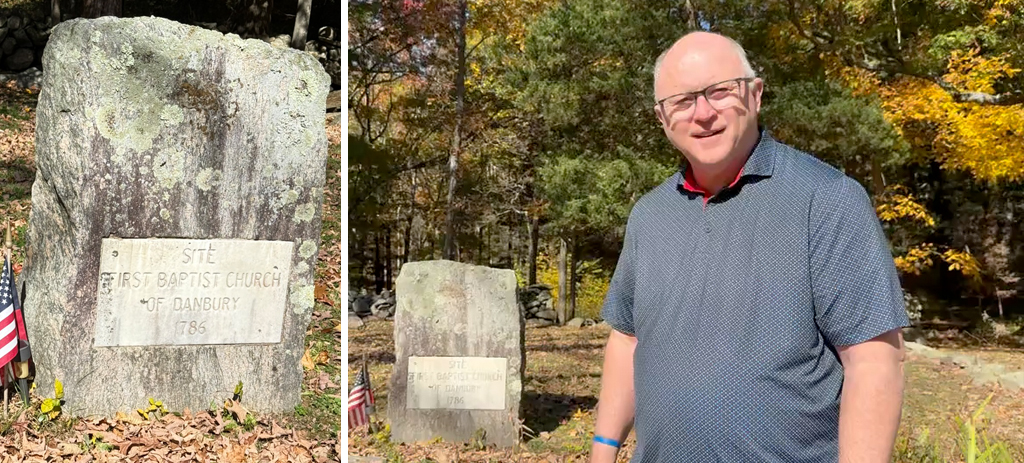
One of the things I enjoy about visiting historic sites is seeing the places where ordinary people made decisions that would shape history. Recently, I had the opportunity to visit the historic site of the First Baptist Church of Danbury, Connecticut.
More than two hundred years ago, Baptist leaders from this region wrote to President Thomas Jefferson about their concerns over religious liberty. His response gave us one of the most familiar, and perhaps most misunderstood, phrases in American history: separation of church and state.
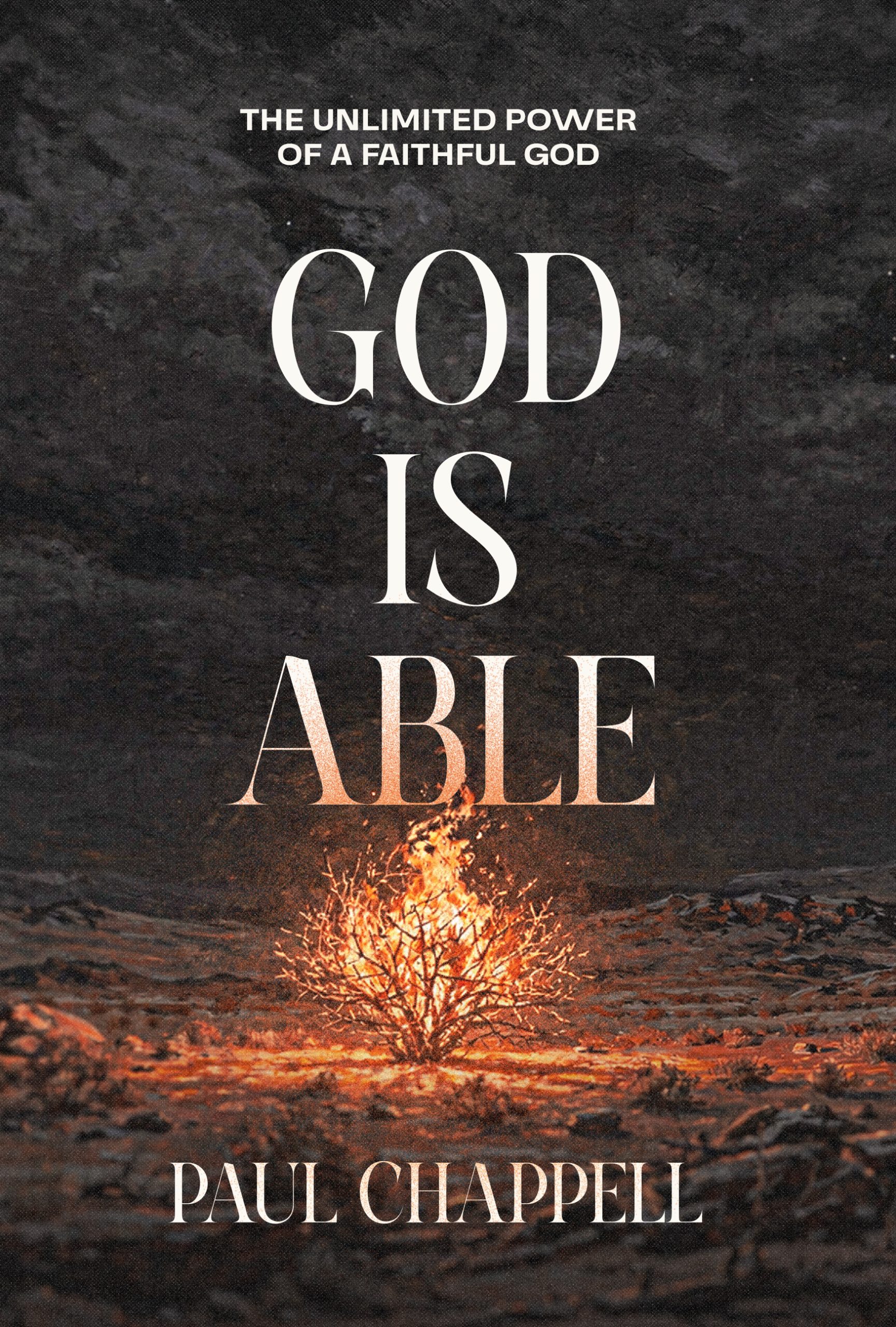
As America celebrates its 250th anniversary, I have spent considerable time studying our nation’s heritage of freedom. Earlier this year, I wrote Founded on Faith, a small book that traces the biblical convictions and courageous sacrifices that helped shape our country.
One of the freedoms I believe Americans most often take for granted is religious liberty. And one of the principles most often misunderstood is the separation of church and state.
So come back with me to Danbury, Connecticut, and consider what this principle originally meant and why it matters today.
Baptists and Religious Liberty
The American heritage of religious liberty precedes the Danbury Baptists by more than 150 years.
Baptists have historically held to the biblical principle of individual soul liberty—the conviction that every person is individually accountable to God for his own faith and conscience. Romans 14:12 declares, “So then every one of us shall give account of himself to God.” And when commanded to cease preaching Christ, the apostles responded, “We ought to obey God rather than men” (Acts 5:29).
For centuries, Christians who held similar convictions faced persecution under governments that attempted to control religious belief. During the Reformation, Anabaptists challenged the union of church and state, insisting that genuine faith could not be compelled by civil authority.
In America, Roger Williams became one of the earliest and most influential champions of this principle. Banished from Massachusetts for his convictions, Williams founded Providence, Rhode Island, in 1636, establishing a community where freedom of conscience extended to people of differing religious beliefs.
In an age when England and much of Europe enforced religious conformity through established churches, this was a remarkable departure from accepted practice. In Founded on Faith, I suggest that, at the time, Rhode Island was literally the freest place on earth. That was because it extended true religious liberty to all.
Writing in 1644, Roger Williams described the need for “a hedge or wall of separation between the garden of the church and the wilderness of the world.” Williams’ concern was that government control would corrupt the church and that civil authorities should not dictate matters of conscience.
This conviction helped lay the groundwork for the distinct American protection of religious liberty.
Today, when many nations provide some measure of religious liberty, it is easy to forget how revolutionary this principle was in the 1600s. But it was the Baptist colony of Rhode Island that pioneered religious freedom in America, which eventually became one of the defining liberties of the United States and has since spread, in some measure, to other nations around the world.
The Danbury Baptists and Thomas Jefferson
Fast-forward to 1801. America had declared her independence, adopted the Constitution, and ratified the Bill of Rights. The First Amendment prohibited the federal government from establishing a national religion or interfering with its free exercise. But those protections did not yet extend to state governments, some of which continued to maintain established churches.
Connecticut was one of those states. Its laws favored Congregational churches, and Baptists and other dissenters remained concerned about government interference in matters of faith.
So, on October 7, 1801, the Danbury Baptist Association wrote to President Thomas Jefferson. Their letter expressed a conviction that religious freedom was not a privilege granted by government but an inherent right. They lamented that the religious liberties they enjoyed were treated as “favors granted, and not as inalienable rights.”
Jefferson responded on January 1, 1802, affirming that religion was a matter between individuals and God and that the First Amendment prohibited Congress from establishing religion or restricting its free exercise. He described this constitutional protection as “thus building a wall of separation between Church & State.”
Jefferson’s reference to a wall of separation echoed the language Roger Williams had used more than 150 years earlier. The religious liberty Williams championed had helped shape America’s understanding of freedom of conscience. Jefferson was now affirming the constitutional protection of that freedom.
Notice what prompted this exchange. The Danbury Baptists were not asking that Christian influence be removed from public life. They were concerned about the government’s authority over religious practice.
The principle of separation of church and state was never intended to silence the church or prohibit Christians from participating in civic affairs. Rather, it was intended to protect freedom of conscience and establish limits on the government’s authority in religious matters.
We should be grateful for this protection. It allows churches to preach the gospel, teach biblical truth, and fulfill their mission without government direction. And it protects the freedom of every individual to follow his conscience in matters of faith, even when those beliefs differ from our own.
Religious Liberty Is Worth Defending
Standing at that historic Baptist church site in Danbury reminded me that the religious liberties we enjoy were not secured by people who remained silent when those freedoms were threatened. They were defended by men and women of conviction who understood that government must never assume authority over the conscience.
Today, we have inherited an extraordinary measure of religious freedom. But we must never assume that liberty will simply preserve itself.
The laws passed by legislatures, the decisions handed down by courts, and the officials we elect all have consequences for religious freedom. For this reason, Christians should take their civic responsibilities seriously. We should pray for those in authority (1 Timothy 2:1–2), vote with biblical convictions in the upcoming midterm elections, stay informed about legislation that affects religious liberty, and be willing to serve and speak up when these freedoms are threatened.
Above all, we must use those liberties for the purpose Christ has given His church. Our greatest responsibility is not political, but spiritual. We have been commissioned to preach the gospel and make disciples. Yet we should never be indifferent to the freedoms that allow us to carry out that mission openly. And we should be willing to do all in our power to protect them.
As we celebrate 250 years of American independence, I thank God for the courage of Baptist leaders like those at Danbury who stood for religious liberty.
And I pray that pastors and Christians across America today will demonstrate that same courage—not retreating from the public square, but faithfully preaching the gospel, speaking the truth in love, and standing firmly for the religious freedom we have been blessed to inherit.