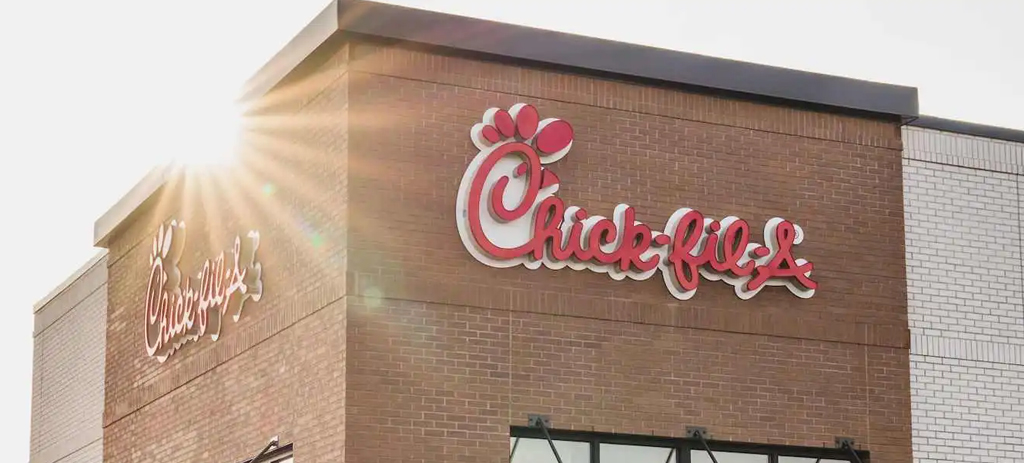
Family Research Council’s news outlet, The Washington Stand, recently covered a story about a Chick-fil-A franchise publicly celebrating a same-sex wedding. When the corporate office was alerted, they defended the franchise with the following statement, highlighting their commitment to DEI:
Thank you for contacting Chick-fil-A CARES. Chick-fil-A embraces all people, regardless of race, gender, ethnicity, sexual orientation or gender identity. Chick-fil-A, Inc. is committed to being Better at Together by embedding Diversity, Equity & Inclusion (DEI) in everything we do. We strive to provide a welcoming and inclusive place for everyone. We do this by focusing on Chick-fil-A’s four Corporate Social Responsibility pillars: Caring for People, Caring for our Communities, Caring for Others through our Food, and Caring for our Planet.
To learn more, visit our Giving Back page and our Diversity, Equity, and Inclusion page.
For those who have followed Chick-fil-A’s concerning funding and hiring decisions over the past several years, this response may not be shocking. Still, it is deeply disappointing. It represents a full-circle departure from the mission of Chick-fil-A’s Christian founder.
Years ago, Dr. R. B. Ouellette and I sat in a meeting with Truett Cathy in his office for nearly ninety minutes. He shared his testimony, talked about the boys’ Sunday school class he had taught for decades, and spoke warmly of his love for his church. We discussed America, Christian values, and church life.
Mr. Cathy was conservative, and he expressed concern that the music in his church was becoming too contemporary. And now, just eleven years after his death, the company he founded is celebrating gay “marriage” and defending that decision.
I am not privy to the inner workings of Chick-fil-A, nor can I say precisely when or how this shift occurred. But as a student of God’s Word and a pastor of over four decades, I do know this: compromise often begins small, but it never remains small if left unchecked.
The pressure believers face today to accommodate their views or adjust their public stance in order to remain acceptable is real and intense. Yet Scripture leaves us no confusion about how we are to respond: “Be not conformed to this world: but be ye transformed by the renewing of your mind” (Romans 12:2).
If God’s Word is truly God’s Word, then there are moments when Christians must stand—regardless of consequences. We cannot affirm what God forbids or celebrate what God condemns and still claim faithfulness to Him. “We ought to obey God rather than men” (Acts 5:29).
This applies far beyond one company. It applies to Christian business owners deciding how publicly their values will shape their policies. It applies to believers in corporate America navigating expectations and advancement. It applies to churches tempted to soften truth in order to remain acceptable.
Faithfulness has always carried a cost. Scripture guarantees it: “Yea, and all that will live godly in Christ Jesus shall suffer persecution” (2 Timothy 3:12).
The question before us is not whether the pressure will increase—it will. The question is whether Christians will still stand when doing so becomes uncomfortable, costly, or misunderstood.
The loss of conviction rarely begins with rebellion. It begins with accommodation. And accommodation, left unchecked, eventually becomes surrender.
Now is not the time for Christians to retreat into silence or private belief. It is time to stand—humbly, graciously, and unashamedly—on the unchanging truth of God’s Word.